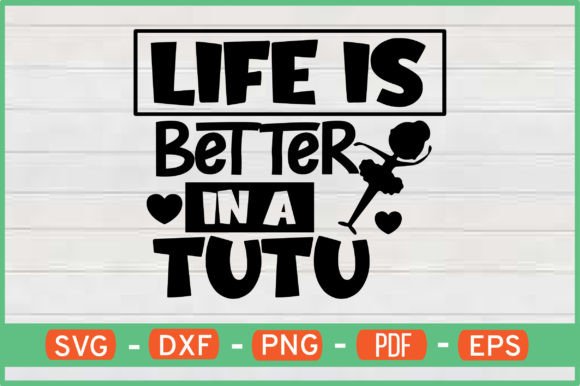
Life is Better in a Tutu T-Shirt Designs
A Designer’s First Look: Whimsy with Wearability
When I opened the Life is Better in a Tutu T-Shirt Designs file, my first thought wasn’t “cute”—it was “usable.” That’s rare. The design balances playful femininity and clean graphic structure: a simple tutu silhouette (no fussy ruffles or layered tulle lines), centered text in a friendly rounded sans-serif, and generous negative space around the entire composition. It doesn’t scream “craft fair overload”; it whispers “thoughtful handmade product.” As an embroidery designer who regularly tests files for client work and small-batch production, I immediately saw its potential on baby onesies, boutique sweatshirts, and embroidered tote bags—especially for spring markets or nursery-themed gift sets.
Real-World Stitch Test: From File to Finished Piece
Last week, I stitched Life is Better in a Tutu T-Shirt Designs onto a lightweight cotton twill tote bag for a local children’s boutique. I used medium-weight cutaway stabilizer and 40-weight poly thread in blush pink and soft grey. The result? Crisp satin-stitched outlines, smooth fill-stitched letters, and zero puckering—even across the curved base of the tote handle seam. Because the design avoids dense fill areas or tiny interior details, stitch time stayed under 8 minutes, and thread breaks were zero. That matters when you’re stitching 30 units for a shop launch or prepping personalized gifts for Mother’s Day.
Where It Shines—and Where to Pause
Life is Better in a Tutu T-Shirt Designs works beautifully on stable, mid-weight fabrics: cotton tees, linen-blend aprons, brushed polyester pillow covers, and baby knit onesies (with tear-away + iron-on combo stabilizer). It reads clearly at 3.5"–4.5" wide—ideal for left-chest placements on youth apparel or center-front embroidery on tea towels and kitchen aprons. As a machine embroidery design, it holds up well in commercial embroidery settings where consistency across batches is non-negotiable.
That said, proceed with care on: stretchy performance knits (pre-stabilize aggressively), dark fabrics with light thread (test contrast—some letterforms lose definition if thread blends too much), and curved surfaces like structured caps (the shape isn’t optimized for crown curvature). Avoid using it below 2.75" wide—the “tutu” outline thins out, and the word “Tutu” risks becoming indistinct. Also skip ultra-textured fabrics like heavy bouclé or looped terry unless you’re willing to adjust stitch density manually.
Design Assets That Build Trust, Not Just Cuteness
This isn’t just another SVG/DXF download—it’s a quiet confidence-builder for craft businesses. When customers see Life is Better in a Tutu T-Shirt Designs stitched cleanly on a hand-finished item, it signals intentionality. No pixelated edges, no awkward kerning, no overcrowded elements competing for attention. That clarity translates directly to perceived value: buyers pay more for pieces that look professionally made, not DIY-assembled. For Etsy sellers and small shop owners, that means stronger listings, better photo mockups, and repeat customers who recognize your consistent aesthetic.
Practical Notes Every Embroidery Designer Should Check
- Test first on scrap fabric—especially if pairing with textured or dark substrates.
- Review stitch density before scaling; denser fills may require lighter stabilizer on delicate items like baby clothes.
- Confirm hoop size compatibility; this design fits comfortably in a 4"x4" hoop at standard sizing, but verify before batching.
- Inspect small details—the waistband line and lowercase “i” dots hold up well, but always zoom in on your embroidery software preview.
- Mock it in black and white to assess legibility on light vs. dark backgrounds.
- Use proper stabilizer: cutaway for knits, tear-away for stable wovens, and fusible + tear-away for lightweight baby items.
- Check licensing terms before selling finished products or bundling the digital embroidery file—you’ll need to confirm whether commercial use is permitted.
Beyond the T-Shirt: Unexpected Uses That Elevate It
I’ve seen Life is Better in a Tutu T-Shirt Designs shine in places you might not expect. On a linen-cotton blend kitchen towel? Yes—soft, legible, and charmingly understated. As an embroidered patch sewn onto a denim jacket? Absolutely—the clean lines read even when slightly distressed. On a custom baby blanket edge or a holiday stocking cuff? It adds personality without overwhelming. And because it’s delivered as vector-based SVG and DXF files, it scales cleanly for printable mockups, social media assets, or branding collateral for your craft business. It’s not just a graphics file—it’s a flexible design asset that supports your full creative workflow.
Final Thought: A Design That Serves the Maker
As someone who evaluates hundreds of embroidery files each year, I don’t reach for Life is Better in a Tutu T-Shirt Designs when I want drama—I reach for it when I want reliability wrapped in charm. It respects the limits of real-world stitching, honors the needs of small business timelines, and still delivers emotional resonance. Whether you’re embroidering a single personalized gift or building a cohesive collection for your Etsy shop, this design doesn’t ask you to compensate for its flaws. It asks you to make something lovely—and lets you do it efficiently, confidently, and well.