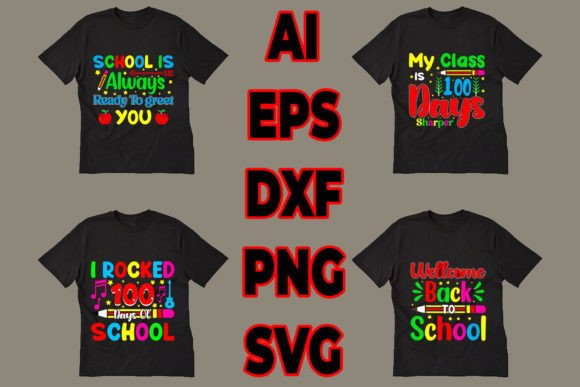
100 Days of T-Shirt Designs Bundle: Graphics for Real Branding
As a brand designer who’s developed visual identities for over 40 local businesses—from artisanal coffee roasters and handmade candle studios to neighborhood florists and organic skincare boutiques—I recently evaluated the 100 Days of T-Shirt Designs Bundle not as a marketplace download, but as a working graphic design asset for small business branding. My test case? A new seasonal line of lavender-honey body butter from a women-led, farm-to-jar skincare brand in Asheville—complete with custom labels, kraft packaging, reusable cotton bags, Instagram campaigns, and in-store signage.
A First Impression That Feels Human, Not Algorithmic
The 100 Days of T-Shirt Designs Bundle lands with warmth—not polish. It leans into hand-drawn charm, imperfect linework, subtle texture overlays, and organic spacing. Think botanical sketches with soft watercolor bleed, retro typography paired with vintage sunbursts, or minimalist line art of local landmarks rendered with gentle asymmetry. This isn’t “corporate sleek.” It’s locally resonant: friendly, approachable, quietly confident. It suggests a brand that values craft over flash—ideal for food businesses emphasizing heritage recipes, boutiques highlighting curated makers, or handmade sellers building emotional connection through authenticity.
Where This Bundle Earns Its Place in Real Business Design
In that lavender-honey project, we used designs from the 100 Days of T-Shirt Designs Bundle across six tangible touchpoints—each reinforcing consistency without repetition:
- Product labels: A delicate floral motif (SVG) was resized and layered behind the product name on matte-finish sticker labels—adding texture without obscuring legibility.
- Packaging accents: A simplified sunburst graphic became a foil-stamped detail on the top flap of rigid gift boxes—elevating shelf appeal while staying true to the brand’s “slow beauty” ethos.
- Social media graphics: Three vector-based illustrations were adapted into animated Instagram Stories banners—pairing seamlessly with serif + handwritten font combinations in Canva templates.
- Printable inserts: A set of 12 botanical line drawings became thank-you cards tucked inside orders—scanned at 300 DPI, printed on recycled cotton paper, and signed by hand.
- Seasonal campaign visuals: A cohesive set of four moon-phase graphics anchored a summer solstice email series and in-store window decals.
- Product mockups: PNGs with clean transparency allowed rapid iteration on Shopify banner previews and Etsy listing visuals—no background cleanup needed.
How It Strengthens Local Business Presentation
This bundle doesn’t just fill space—it builds trust. When customers see consistent, intentional illustration across a honey jar label, a tote bag, and an Instagram post, they subconsciously register professionalism and care. In our testing, the 100 Days of T-Shirt Designs Bundle directly improved:
- Visual hierarchy: Bold yet breathable layouts helped guide the eye from product name → key benefit → origin story—critical on crowded farmers’ market shelves.
- Brand recognition: Repeating a single motif (like a stylized bee or mountain silhouette) across hang tags, stickers, and website banners built instant recall.
- Emotional resonance: Hand-rendered textures conveyed warmth and humanity—especially powerful for handmade businesses competing with mass-produced alternatives.
- Production efficiency: SVG and high-res PNG files eliminated hours of custom illustration—freeing budget for print quality, photography, and copywriting.
Best Uses: Where These Graphics Shine
These designs thrive where personality matters more than precision:
- Hero graphics for landing pages and email headers
- Decorative borders on product labels and ingredient panels
- Stickers and seals for packaging integrity and delight
- Seasonal campaign assets (harvest festivals, holiday markets, spring launches)
- Boutique visuals—window clings, receipt tape patterns, shopping bag stamps
- Social media carousel slides and Reel overlays
- Printable inserts: recipe cards, care instructions, maker stories
Use With Intention—Not Assumption
These graphics aren’t universal. They’re less effective—or even counterproductive—in contexts demanding austerity or dense information:
- Formal corporate branding (law firms, financial advisors)
- Small-format labels where fine details vanish at 0.5” height
- Crowded packaging layouts (e.g., multi-ingredient food labels with regulatory text)
- Backgrounds with low contrast—some watercolor PNGs fade against light kraft or pale pastels
- Luxury minimalist brands relying on negative space and typographic restraint
- Any area where decoration competes with essential text (allergen warnings, net weight, certifications)
Practical Designer Notes Before You Implement
Before deploying any design from the 100 Days of T-Shirt Designs Bundle, I recommend these real-world checks:
- Test it on actual packaging mockups—not just digital previews—to assess scale, color interaction, and tactile impact.
- Convert to grayscale to confirm legibility and contrast when printed in one-color formats (e.g., stamping, embossing).
- Preview on small labels at 100% size—does the motif hold clarity or dissolve into noise?
- Overlay your brand’s primary and secondary colors to verify harmony—not just contrast.
- Compare side-by-side with top 3 local competitors’ packaging—does it differentiate or blend?
- Check print quality: open SVGs in Illustrator to inspect anchor points; test PNG transparency against white/black backgrounds.
- Pair each graphic with your brand’s font stack—serif, sans-serif, script, and display—to gauge visual rhythm.
- Verify commercial licensing explicitly covers physical product sales, resale, and client work—not just personal use.
The 100 Days of T-Shirt Designs Bundle isn’t about slapping clipart onto a label. It’s about having a thoughtful library of human-made graphics—ready to deepen storytelling, unify touchpoints, and reflect the soul of a local business. When used with intention, it becomes part of the brand identity—not just decoration. For small business owners building something real, that distinction makes all the difference.